Monday, February 25, 2013

Swarovski Optik At Cley Spy

This spring we are proud to announce that we are dedicating the weekend of 16th and 17th of March to Swarovski Optik and the wildlife of the Bayfield Estate, where our main shop is based. With the help of Swarovski Optik and local tour leader Chris Mills we will be introducing you to the local area and its wildlife and demonstrating some of the latest digiscoping technology and wildlife recording techniques. Best of all, it's all free!


Saturday 16th March
Two wildlife walks will be taking place lead by the highly knowledgeable and experienced tour guide Chris Mills. Swarovski will be bringing a selection of their latest binoculars to try out in the field. These walks will take in the Bayfield Wildlife Walk and its diversity of habitats. This three-mile circular walk that passes our Glandford shop takes in a mixture of open arable fields, plantation and ancient woodland and river meadows. It is a gentle walk with shallow gradients and firm paths, taking around an hour-and-half to two hours to complete. The diversity of habitats and the environmentally conscious farm management of the Estate have made this area a haven for birds, mammals, reptiles, amphibians and plants. Suitable footwear for potentially wet grass and some softer paths.
Booking is essential for these walks as places are strictly limited to ten per walk. The first walk will start at 10am and the second at 2pm.


Sunday 17th March
Glandford Digiscoping Day. A representative from Swarovski will be at our Glandford shop demonstrating their latest optical equipment and digiscoping adapters. Come and learn the techniques and try out the equipment with expert advice from Swarovski and our experienced staff.

Sunday, February 17, 2013

Dressed for the occasion


Having the right clothing is essential to enjoying being in the great outdoors. As well as keeping warm and dry, birdwatchers also need gear that is quiet, durable and that blends in with their surrounding. Here at Cley Spy we all have been through the process of trying to find the right equipment, be it optics, tripods or clothing, and know just how frustrating it can be. This is why we stock the best kit for the purpose at a range of prices to suit your budget and requirements. Be it occasional walking and birding or working outdoors in all weathers or hiking in the mountains we have the right clothing and staff who use this type of clothing most days and can offer sensible advice.

The two main brands we stock are Jack Pyke and Paramo. Paramo is highly specified technical hiking and mountain gear designed to be waterproof, breathable and quick-drying and light weight. Paramo also do a range of shirts and baselayers. Jack Pyke clothing is more classic country clothing and casual outdoor ware, including warm and waterproof 3-in-1 jackets, soft shell gilets and cargo trousers. Both are highly specified, comfortable and durable, and we like them so much that we all own items from both brands!

Below is some of the clothing that we have used over the last few years.
 

Paramo Taiga Fleece

Not your average fleece jacket, this is a smart, hard-wearing water repellent outdoor coat. I wear mine almost all the time and in the last 5 years it has been through mud, dust, sand and many hedges and still looks as good as ever. It has proved to be very resilient to thorns and is sufficiently water resistant for most rain I'm prepared to go out in.


Jack Pyke 3-in-1 Jacket

This is a two piece jacket consisting of a soft-textured waterproof outer coat with a zip in fleece. This is a very warm, windproof and waterproof country jacket with a good number of pockets and is quite when moving. It also has the additional feature of a fold out waterproof panel on the back that acts as dry seat wherever you are.


Paramo Cascarda Trousers

These technical waterproof insulated walking trousers are great as either over trousers or as a garment on their own. Like all Paramo waterproof gear these are hard-wearing and comfortable and easily maintainable with Nikwax Tech Wash and TX direct reproofing.


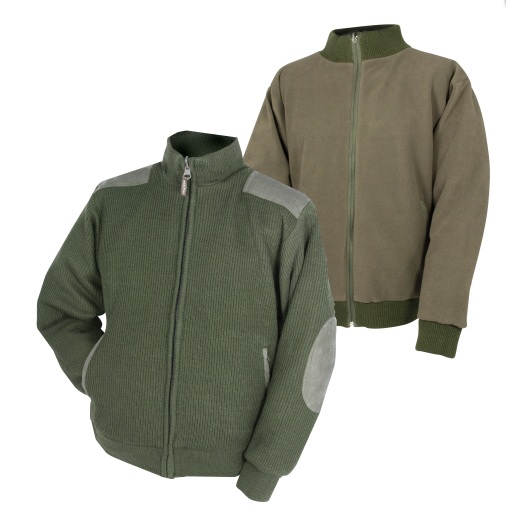
Jack Pyke Reversible Countryman Jumper

We liked these so much they are now our uniform jackets. Very warm, waterproof and windproof these are comfortable and hard-wearing. One side is dark green ribbed knitted outer with waist pockets, the other side is a soft fleece in a lighter sage green and has its own separate pockets.


All these and much more are available at our Glandford shop including Tilley and Laird of London hats, and Healthy Back Bags.

Friday, February 1, 2013

Candid Camera


Caught on camera. Our resident barn owl.
The Bushnell Natureview
Cam HD
The snow that has been with us for the last few weeks has not only brought larger than usual numbers of birds to our feeds but has also left a trail of evidence of some of the wildlife that visits in the night in the form of footprints. Rabbits, stoats, deer and foxes have all left their calling cards in the snow. We have also found in and around our buildings the distinctive pellets and droppings of the barn owl that regularly hunts over the fields behind the shop. In an effort to see these nocturnal visitors we have set up an motion-triggered infra red camera that can record both still images, singly or in a burst, and high definition video. The camera works from four or eight AA size batteries and is just as capable at producing infra red images in total darkness using its built-in black light LEDs that do not disturb the wildlife as it is at full colour daylight images. After a few weeks of adjusting the settings and trying various locations we have successfully captured the barn owl roosting getting ready to hunt in the low afternoon sun.


Owl food Wood mice are one of the smaller
 residents of our back field
These cameras can reveal some surprising things in almost any location as was revealed by the BBC television series The Lost Land of the Tiger. Even if you don't have tigers visiting your garden these devices can give you an insight into just what is going on in the rose bushes. The key to success is patience and taking a trial and error approach to getting the position and settings just right.

We had a great start with ours and keep an eye on this blog and our Twitter and Facebook pages for more updates on the secretive visitor to our little wildlife haven.

Saturday, December 22, 2012

Mavis, Susie and Billy Wise

The names by which we know birds in English have not always been set in stone, having changed and evolved with many regional variations. This is still happening with the official names of species in field guides trying to reach international consistency to avoid confusion. Sometimes this replaces a taxonomically inaccurate but descriptive name with something altogether less poetic. A good example of this is the renaming of the Fan-tailed Warbler as the Zitting Cisticola, a name that doesn’t exactly fire the imagination. Other names have been changed because they reflect the appearance of the species at the time of the year it is most often seen in Britain. The Grey Phalarope (a good descriptive name for the winter plumaged birds we see here) is now known as the Red Phalarope which is a more accurate description of the species in its northern breeding grounds.

One of the British Birds oils by Charles Collins (1736)
Before the standardising of scientific nomenclature and greater understanding of the genetic groupings of species classification was largely based on physical appearance, behaviour and habitat. As an example, reed buntings and sedge warblers, both small, brown and streaked passerines were referred to as reed sparrows. These, and a selection of some other obsolete but intriguing names were found on the backs of a series of oil paintings hanging in the Panelled Lobby at the National Trust's Anglesey Abbey in Cambridgeshire. Painted by Charles Collins (1680 – 1744) in 1736 these oils are a valuable early source of English names, some of which are found in other sources and some that may have been regional to Collins's native Ireland or even falling out of use at the time.
Below is a selection of some interesting examples of old, local and obscure avian nomenclature including the most unusual from the Collins oils (denoted with CC 1736).
 
Weasel Coot
Of unknown origin, this is a rather bizarre East Anglian name for redhead Smew.
 
Susie
(female Mallard) This is a term used mostly by wildfowlers.
 
Hanser
East Anglian for Heron. This is a regional variant of a name that was probably fairly widespread across England. It features in one odd form in Shakespeare's Hamlet in the line “I am but mad north-north-west. When the wind is southerly, I know a hawk from a handsaw.” I still come across some old Norfolk boys and gels who use this name.
 
Wind Hover
(Kestrel) This is a fine example of a behavioural name.
Lapwing at Cley (Phil Farndon)
 
Hornpie, Green Plover, Peewit
The Lapwing is a bird has an impressive collection of names, and it is easy to understand why this distinctive and beautiful plover has caught the imagination of people over the centuries. Hornpie is the Norfolk dialect name.
 
Seapie
(Oystercatcher) Derived from the same root as the Hornpie, with the 'pie' referring to the black and white appearance of the bird.
 
Drain Swallow, Whistling Snipe, Tree Sandpiper
(Green Sandpiper) All three of these now obscure names are far more descriptive of the bird than the now standard name.
Barn Owl at Wiveton (Phil Farndon)
Billy Wise
(Barn Owl) A rather charming example of proper Norfolk.
 
Bank Martin (CC 1736)
(Sand martin)


Ox-eyed Titmouse (CC 1736)
(Great Tit) The family of birds we now know as tits were until relatively recently called titmice.

Colemouse (CC 1736)
(Coaltit)


Bum Barrel
(Long-tailed Tit) Another Norfolk name.
 
Mavis (CC 1736)
(Song Thrush) Another once common name.
 
Storm Cock
(Mistle Thrush) Anyone who has heard a mistle thrush in full song at the very top of a tall tree in rough winds before a storm will understand just how apt this name is.
 
Titlark (CC 1736)
(Meadow pipit) A fine example of describing a bird in terms of two more familiar species.
 
Stonechat at Cley (Phil Farndon)
Stone Cutter (CC 1736)
(Stonechat)
 
Beam Bird (CC 1736)
(Spotted Flycatcher) There is no obvious derivation for this. My own theory is that this species may have been in the habit of using the beams of animal shed and barns as a perch when catching insects.
 
Small Reed Sparrow (CC 1736)
(Sedge Warbler)
 
Grasshopper Lark (CC 1736)
(Grasshopper Warbler)
 
Golden Crowned Wren (CC 1736)
(Goldcrest)
 
Butcher Bird (CC 1736)
(Great Grey Shrike) This name is derived from the habit shrikes have of impaling there prey on thorns, as a butcher would hang meat.
 
Aberdevine (CC 1736)
(Siskin) Of unknown origin, but used for this species mostly when kept as a cage bird.
 
Pink or Spink
(Chaffinch) Variations on this onomatopoeic name are found across the country. Spink is the East Anglian variant and Pink is used in the Midlands.
 
Bramble Finch (CC 1736)
(Brambling)
 
Reed Sparrow (CC 1736)
(Reed Bunting)

Monday, December 3, 2012

Winter Birdwatching in Norfolk


Brent Geese at Cley Beach in Winter (Phil Farndon)


This is one of the legendary birdwatching locations in Britain, with a diversity of habitats and being uniquely placed projecting east into the North Sea, Norfolk catches some of the most exciting and inspiring birds the UK has to offer. From the sweeping mud flats and sand dunes of the west via the salt and fresh marshes and fragile cliffs, to the grazing marshes and shallow lakes of the broads in the east. This is one of the best locations in the country to see the most spectacular winter wildlife sights, all within easy reach.


Pink-footed Geese

Pink-footed Geese (Mick Green)
The arrival of tens of thousands of these vocal Arctic geese is the most awe-inspiring spectacle. Spending their days feeding on farmland around the county, in the evening long, straggling skeins of a few hundred at a time will make their way back to the coast and the safety of mud flats and marshes to roost. The best time and place to see the impressive scale of this migration is at dawn after a dark, moonless night at Snettisham on the west-facing end of the coast.


Knot in flight (Mick Green)
Knot
These are another specialist of the mud. Thousands of these dumpy waders will gather to feed on the foreshore, continually rearranging themselves as the tide retreats and returns. Their name is said to derive from the story of Cnut, the 11th Century king of Denmark, England and later Norway showing to his subjects that even he could not hold back the tide. Again the sheer numbers make these birds a breathtaking sight as they wheel and turn in unison.

Snow Buntings and Shore Larks

Snow Bunting (Mick Green)

Shore Lark (Mick Green)
Moving east to the sand dunes of Thornham, Holkham and Wells and the shingle ridge from Blakeney Point, Cley and Salthouse more Arctic breeders can be found. In spite of their bright Naples yellow heads and throats, Shore Larks are masters of camouflage and so are difficult to find, especially on shingle, but are well worth the effort. Snow Buntings are more gregarious and tightly bunched flocks of sixty or more can be seen in their bouncing flight along the shingle ridge at Salthouse most years. When on the ground they can be as hard to find as the Shore Larks, apparently vanishing as they land on the stones. It often happens that you will notice one and then realise that a dozen or so more are also there feeding invisibly in full view around it.

Wildfowl
The fresh marshes of Cley and Salthouse are a haven for wintering Wigeon, Teal, Gadwall, Pintail and Brent Geese. The Norfolk Wildlife Trust reserve at Cley Marshes is one of the best places to get up close to these species and also get large flocks of Golden Plover and Lapwing coming in to roost in the evening.

Barn Owls, Short-eared Owls and Harriers
Barn Owl (Mick Green)
When travelling around the coast and countryside always keep and eye open for birds of prey hunting over fields, verges and reed beds. East Anglia and Norfolk especially holds one of the densest populations of Barn owls in the country. These elegant and silent hunters are crepuscular (most active in the twilight of dawn and dusk) but will frequently fly during the day and are captivating to watch quartering a meadow in search of voles in low winter sunlight.


Short-eared Owl (Mick Green)
Short-eared Owls are winter migrants that can in some years arrive in large numbers. It is often worth scanning across heaths, reed beds and marshes for these large, fierce-eyed birds. In the same habitats and over farmland in the coastal hinterland look out for Hen and Marsh Harriers spending the winter in Norfolk.


Bean Geese
One for the connoisseur, these geese are winter visitors in low numbers from northern Europe and Asia. There are two races of these grey geese, the Tundra and the Taiga, their names indicating their favoured breeding grounds. Superficially similar to Pink-footed Geese but with orange on the legs and bill they can be challenging to pick out and often are very mobile making an element of luck important in finding them. They are best observed on open fields and grazing marshes all along the coast and inland at sights around the Broads and East Norfolk rivers like Buckenham and Cantly.
  
Winter gems
Lapland Bunting (Mick Green)
As well as the regular delights mentioned above there is always the possibility of happening across a rarity or one of the scarcer visitors to this county. In some years Lapland Buntings can be found in coastal fields or mixed in with Snow Buntings, in the Broads small parties of Cranes feed on the grazing land, and in harsh northerly winds high Arctic gulls come down the North Sea.  Large numbers of Waxwings sometimes are driven south by hard winters in Scandiavia and come to feed on fruit and berries, often in gardens and carparks at the edge of towns. Norfolk is also one of the best areas to see Rough-legged Buzzards around the coastal marshes and Broads.


The great joy of birdwatching is the unexpected, and anywhere along the coast you stand a good chance of turning up something out of the ordinary. The best way to increase your chances is to tap into the local knowledge and reports and ask the perennial question of birders everywhere, “Much about?”.

Some of the best sources of Norfolk wildlife information on the internet are listed below.


Cley Spy.
The largest dedicated optics shop in the UK with 200 models of binoculars and over 50 models of telescope in stock plus a good range of second hand optics.  We also stock tripods, bird food, straps, Tilley hats and Paramo and Jack Pyke outdoor clothing.

Local Birder who regularly blogs on the birding scene in Norfolk with highlights of the days bird news from RBA. This blog is valuable sources of up-to-date information and photos.

A subscription bird news service with online and pager news sent out 24/7.

Online bird news service with free to access overview of UK bird sighting or subscribe for full details.

Lots of information and photos from the Cley area.

Norfolk wildlife photographer and member of the Cley Spy team.

A group of young, mainly Norfolk based birders with a unconventional outlook on the birding scene.

Monday, November 12, 2012

How to clean binoculars and telescopes


If looked after well binoculars and telescopes can keep working for many decades, but inappropriate cleaning can cause potentially expensive damage. We have seen many badly scratched lenses and seized eyecups and focusing wheels that could have been avoided by following a few simple rules that will keep your kit in tip top condition.

Keep it clean.
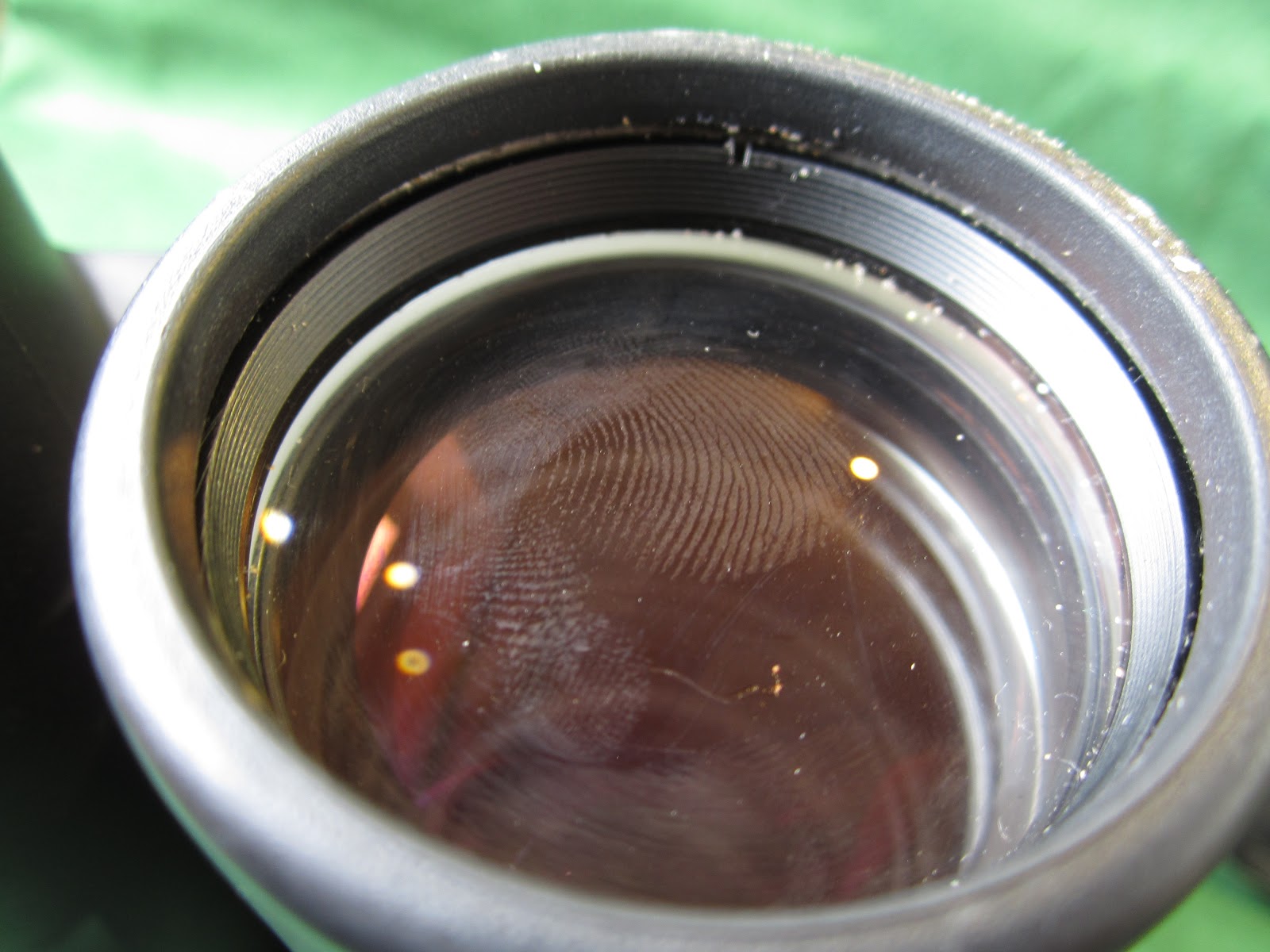
Sand, fingerprints and dust. Time for a clean.
This may sound obvious, but if you want to avoid the risk of damage then not cleaning too frequently is best. Optics that are used in the field will get dirty eventually but using rainguards and lens caps will help keep the muck out for longer.

Try not to clean when out in the field.
This is usually when damage is done. It is not always convenient to carry a full cleaning kit in the field and the temptation to quickly remove a speck or smear with a cloth or the hem of your shirt/scarf/skirt/pants can be great, but resist!

Clean at room temperature.
If you try to clean when the lenses are too cold it is very hard to successfully remove any greasy marks and you tend to just spread the muck around.

All you need to keep clean.

Use the right tools for the job.
What you need is:

An air blower

A soft brush

A clean lens cloth

Lens cleaning fluid

Step 1:
Don't touch the lenses yet! The first thing to do is remove any loose dust, sand or grit without risking getting it embedded in the lens cloth or scratching the lens coatings. The best way to do this is using a rubber bulb type air blower with the lens facing downwards to allow any grit to fall out. After you have done this use a soft brush to flick out any bits that the blower didn't shift.

Step 2:
And breathe... A quick huff or two on the lens for a coating of moisture works a treat, then using a lens cloth to wipe round. Don't push too hard with the cloth and fold it so that you have two or three layers under your finger. If there is a single spot or fingerprint on the lens then try to remove this without spreading it all over the lens.

Step 3:
Still not clean? If there is still smearing on the lens then a little cleaning fluid should sort it out, but don't spray it on to the lens because it will be very difficult to remove it all and with some older bin it can seep inside. Spray onto the lens cloth and carefully apply it to the greasy area only, then another breath on the lens and wipe with a bit of cloth without cleaning fluid on.

Salt.

Salt under the microscope. The hard, sharp-edged crystals
can easily scratch lens coatings
When you are out by the coast in rough conditions everything will get covered in spray and when this dries hard crystals form which can scratch the lens coatings. To avoid this the crystals must be dissolved before cleaning. Start the cleaning with step 1 then proceed as follows. If there is only a light covering of spray then the condensation from warm breath is often enough but if the lenses are well encrusted then it becomes a little more tricky. With fully waterproofed optics you can use a shallow bowl of warm water to just dip the lens surface into for long enough to let the crystals dissolve. With non-waterproofed optics the risk of getting moisture inside is too great for this to be recommended, so breathing on the lenses when they are cooler will have to suffice and is often enough. After this then follow step 2 again.

Sand.
It gets everywhere. This is the worst enemy don't miss out on seeing something because you are trying to keep your bing it around it will find its way into eye cups, focusing wheels and hinges. While there is not a lot you can do about this keeping your rainguard on as much as possible will help and if you have twist-up style eye cups turn them down to keep sand out of the mechanism. When you get home follow step 1 to remove as much as possible without touching the lenses.

DEET.
Many insect repellents contain the chemical N,N-Diethyl-meta-toluamide (C12H17NO) commonly known as DEET. This is a volatile chemical that is very good at keeping the mozzies away but also attacks rubber armouring and some plastics on binoculars and scopes. While there are some places where the insects are so numerous and determined that DEET is the only option, it is best kept away for you optics or the rubber may begin to peel, bubble and crack with repeated contact.


Birdwatching optics are designed to be used outdoors and sometimes they will get dirty, so don't miss out on seeing something because you are trying to keep your binoculars clean, but a little care goes a long way. Some hardened twitchers regard filthy kit as a way of showing you are a serious birder but this is no excuse for mistreating your gear and there is a difference between well used and abused. If you look after your optics they can last a lifetime.


Cley Spy

Saturday, November 3, 2012

Autumn work and birdwatching in the fog


'Tis the season of mists and mellow fruitfulness, northern migrants and rare vagrants, and preparing for the winter.


The cut hay ready for raking up.
Over the last few weeks we have been busy doing some much needed maintenance on the Bayfield Wildlife Walk and our own wildlife field behind the Glandford shop. Now that the wild flowers have set seed and the majority of the grasshoppers and other insects have reached the end of this years life cycle it was time to cut the meadow. The plan is to keep the filed as mostly open grass and flower meadow with bramble and hawthorn scrub patches at the top end and cover around the edges. Cutting the grass once a year not only stops scrub and eventually trees taking over but also removing the cuttings gradually reduces the nutrient in the soil, creating conditions that deter thistles, nettles and rank grasses dominating and favours a more diverse grass and flower mix. An added bonus is the heap of cuttings provides a warm refuge for grass snakes and as it decays a rich source worms and insects for the birds and small mammals. The small size of the area (half an acre) means that an appropriate level of grazing would be difficult to achieve, and whilst we try and keep the use of machinery to a minimum a petrol brush cutter was the best option for managing this field. Decked out in the appropriate safety gear and with a period of cool overcast weather the task was complete two days and five litres of fuel later. With smell of new mown hey in our nostrils and a sense of satisfaction at a job well done we then turned our attention to revamping the Bayfield Wildlife Walk.


The first of the new
way markers
The way markers had for a long time been an incomplete rag-tag collection of yellow arrows tied and nailed to trees, fences and posts often concealed by vegetation. We replaced these with treated round posts with sloped tops onto which we nailed yellow plastic arrows (recycled from old margarine tubs!). The idea is that now there are consistent and easily spotted markers at all the points where there is a opportunity to take the wrong path. These are complemented by a new information sign at the start of the walk next to our shop showing a map and some things to look out for around the walk.

This is one of my favourite times of the year to be working outdoors, with the cool air filled with the rich and musky scents of the soils and woodland, wildlife in abundance and the satisfaction to be had from preparing for the winter and new year ahead.

One of the Ring Ouzels in our field at Glandford

Over the last few weeks northerly air movements and low cloud brought in unprecedented numbers of migrant thrushes and chats to Norfolk. The best rarity of this fall was a very confiding red-flanked bluetail atStiffkey, but the most impressive spectacle was the shear numbers of thrushes and especially ring ouzels. During the few days of fog almost anywhere you went along the coast the hedges, bushes and fields held dozens of these robust and wary 'mountain blackbirds' in amongst the flocks of redwings, fieldfares and blackbirds. Taking advantage of the newly cut field we even had two ring ouzels stop at Glandford and at least two black redstarts outside both shops.


For more information on the Bayfield Wildlife Walk and a printable map download please go to the Cley Spy website.


Cley Spy.