Friday, April 19, 2013

Wide-eyed: The new Kowa 25-60x wide-angle zoom eyepiece

The New Kowa TE-11WZ Wide-angle Zoom
As has been mentioned in previous blog posts, the big news in spotting scopes in the last couple of years has been wide-angle zooms, giving both the flexibility of variable magnification and a very good angle of view. The latest manufacturer to join the 'one eyepiece for everything' club is Kowa.


Kowa are one of the most respected Japanese optics companies with a particular forte for spotting scopes and a legacy of ground-breaking equipment going back over thirty years. For many birders in the mid to late 1980s the 77mm TSN 1,2,3 and 4 were the bee's knees when it came to near indestructible high-performance scopes. At that time fixed 20x or 30x were the eyepieces to have, not only because they were good lenses but also because the zooms available from all manufacturers were almost useless for birding on account of being soft and having a field of view nearly big enough to get an entire goldcrest in at fifty yards.


These days zooms are much better to the point of outselling fixed eyepieces more than 20:1 and offering fields of view nearly on a par. The latest generation of zooms from Leica, Swarovski and a host of others give a magnification range of 25-50/60x and have much improved field of view. Both of the afore mentioned European companies now only have zooms in the current product line ups and the ATX Swarovski scopes eyepiece is part of a rear module that includes the prisms and therefore most of the glass in the scope.


The TSN-IP4S phone scoping adapter
Kowa have stuck to the traditional body-and-eyepiece format and introduced their first wide-angle zoom, made for the 770 and 880 series scopes. Physically it uses the same metal chassis as the 20-60x that was launched with these scopes in 2006, and so is the same size and near enough same weight.  The biggest advantage to keeping the same dimensions as the previous eyepiece is that Kowa's excellent iphone digiscoping adapter fits it perfectly.  The mechanics and build are up to the high standards you should expect for a scope of this quality, feeling positive, nicely damped and robust.


Optically it has a tough act to follow in the form of the 'old' 20-60x but it in no way disgraces itself, delivering everything its predecessor could and a bit more punch, edge sharpness and of course field of view. I tend not to hold a lot of store in the figures quoted in specification sheets as it doesn't always translate into what the eye sees, so purely for a subjective point of view the new eyepiece is notably wider at 25x than the 20-60x is at 20x and this increase holds up right through the range. One of the real strengths of the 880 series is the phenomenal brightness from the large 88mm objective lens, especially at 60x and the new eyepiece, unlike some manufacturers' offerings, retains the this power rather than restricting the range to 50x.


At £669 it is quite and investment, but it really does deliver what it set out to and will keep Kowa at the cutting edge of spotting scope technology.

Saturday, March 23, 2013

Planning (and hoping) for Spring


Are you sure this is Spring? Work in progress on the fence in
arctic March weather.
With the promise of warmer weather and the breeding season starting in a few weeks time we have been getting to work in our back field. The first task is putting up a new fence along the track edge to help cut down on disturbance to the nesting and feeding birds. Being an exposed location a conventional wood panel fence would soon get flattened by the first south-westerly blast to come across the fields, so something a bit different is required. On advice from an experienced Scottish fence builder we are going for a construction of 4'' square wooded posts, half-round rails and windbreak screening fabric. This is an unconventional method but it has been tried and tested on the windswept Aberdeenshire coast so should be up to the job.

Mowing the old growth before ploughing and
resowing with the conservation mix.
On a grander scale our larger back field has been mown and ploughed in preparation for reseeding with the conservation mix of seed-baring plants to keep the overwintering finches and buntings happy and well fed later this year. This seed mix, including sunflowers, millet, buckwheat, fat hen, linseed and kale, is part of the Bayfield Estate's Higher Level Stewardship (HLS) agreement . This crop will again be left standing for two years when the same cycle will begin in 2015. Schemes like the HLS are helping to slow and in some cases reverse the appalling decline in farmland birds across Europe and when coupled with conservation-minded management, as here at Bayfield, they can recover sights and sounds of the countryside that could so easily have been lost for ever. During the winter of 2011-12 we were treated to the spectacular of hundreds-strong flocks of linnets and good numbers of redpoll, brambling, chaffinch and even a few tree sparrows. There will also be sea of yellow when the sunflowers bloom in the summer.


Remember this?  Come on Spring, we need some sunshine!
When the warmer weather does eventually arrive we will hopefully get a better year for insects, especially butterflies, which endured great hardship over last years cool and wet summer. Fingers crossed for a wildlife filled spring and summer.

Cley Spy

Monday, February 25, 2013

Swarovski Optik At Cley Spy

This spring we are proud to announce that we are dedicating the weekend of 16th and 17th of March to Swarovski Optik and the wildlife of the Bayfield Estate, where our main shop is based. With the help of Swarovski Optik and local tour leader Chris Mills we will be introducing you to the local area and its wildlife and demonstrating some of the latest digiscoping technology and wildlife recording techniques. Best of all, it's all free!


Saturday 16th March
Two wildlife walks will be taking place lead by the highly knowledgeable and experienced tour guide Chris Mills. Swarovski will be bringing a selection of their latest binoculars to try out in the field. These walks will take in the Bayfield Wildlife Walk and its diversity of habitats. This three-mile circular walk that passes our Glandford shop takes in a mixture of open arable fields, plantation and ancient woodland and river meadows. It is a gentle walk with shallow gradients and firm paths, taking around an hour-and-half to two hours to complete. The diversity of habitats and the environmentally conscious farm management of the Estate have made this area a haven for birds, mammals, reptiles, amphibians and plants. Suitable footwear for potentially wet grass and some softer paths.
Booking is essential for these walks as places are strictly limited to ten per walk. The first walk will start at 10am and the second at 2pm.


Sunday 17th March
Glandford Digiscoping Day. A representative from Swarovski will be at our Glandford shop demonstrating their latest optical equipment and digiscoping adapters. Come and learn the techniques and try out the equipment with expert advice from Swarovski and our experienced staff.

Sunday, February 17, 2013

Dressed for the occasion


Having the right clothing is essential to enjoying being in the great outdoors. As well as keeping warm and dry, birdwatchers also need gear that is quiet, durable and that blends in with their surrounding. Here at Cley Spy we all have been through the process of trying to find the right equipment, be it optics, tripods or clothing, and know just how frustrating it can be. This is why we stock the best kit for the purpose at a range of prices to suit your budget and requirements. Be it occasional walking and birding or working outdoors in all weathers or hiking in the mountains we have the right clothing and staff who use this type of clothing most days and can offer sensible advice.

The two main brands we stock are Jack Pyke and Paramo. Paramo is highly specified technical hiking and mountain gear designed to be waterproof, breathable and quick-drying and light weight. Paramo also do a range of shirts and baselayers. Jack Pyke clothing is more classic country clothing and casual outdoor ware, including warm and waterproof 3-in-1 jackets, soft shell gilets and cargo trousers. Both are highly specified, comfortable and durable, and we like them so much that we all own items from both brands!

Below is some of the clothing that we have used over the last few years.
 

Paramo Taiga Fleece

Not your average fleece jacket, this is a smart, hard-wearing water repellent outdoor coat. I wear mine almost all the time and in the last 5 years it has been through mud, dust, sand and many hedges and still looks as good as ever. It has proved to be very resilient to thorns and is sufficiently water resistant for most rain I'm prepared to go out in.


Jack Pyke 3-in-1 Jacket

This is a two piece jacket consisting of a soft-textured waterproof outer coat with a zip in fleece. This is a very warm, windproof and waterproof country jacket with a good number of pockets and is quite when moving. It also has the additional feature of a fold out waterproof panel on the back that acts as dry seat wherever you are.


Paramo Cascarda Trousers

These technical waterproof insulated walking trousers are great as either over trousers or as a garment on their own. Like all Paramo waterproof gear these are hard-wearing and comfortable and easily maintainable with Nikwax Tech Wash and TX direct reproofing.


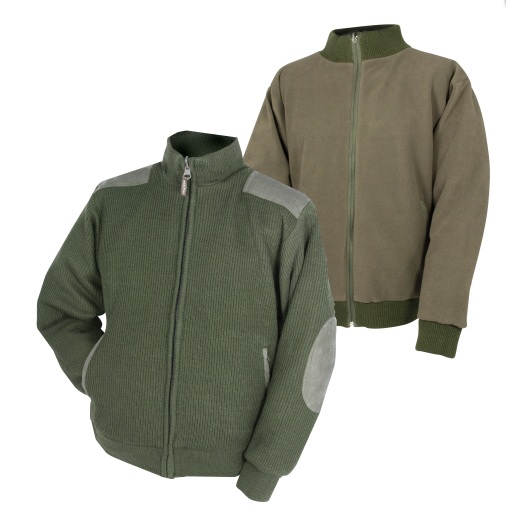
Jack Pyke Reversible Countryman Jumper

We liked these so much they are now our uniform jackets. Very warm, waterproof and windproof these are comfortable and hard-wearing. One side is dark green ribbed knitted outer with waist pockets, the other side is a soft fleece in a lighter sage green and has its own separate pockets.


All these and much more are available at our Glandford shop including Tilley and Laird of London hats, and Healthy Back Bags.

Friday, February 1, 2013

Candid Camera


Caught on camera. Our resident barn owl.
The Bushnell Natureview
Cam HD
The snow that has been with us for the last few weeks has not only brought larger than usual numbers of birds to our feeds but has also left a trail of evidence of some of the wildlife that visits in the night in the form of footprints. Rabbits, stoats, deer and foxes have all left their calling cards in the snow. We have also found in and around our buildings the distinctive pellets and droppings of the barn owl that regularly hunts over the fields behind the shop. In an effort to see these nocturnal visitors we have set up an motion-triggered infra red camera that can record both still images, singly or in a burst, and high definition video. The camera works from four or eight AA size batteries and is just as capable at producing infra red images in total darkness using its built-in black light LEDs that do not disturb the wildlife as it is at full colour daylight images. After a few weeks of adjusting the settings and trying various locations we have successfully captured the barn owl roosting getting ready to hunt in the low afternoon sun.


Owl food Wood mice are one of the smaller
 residents of our back field
These cameras can reveal some surprising things in almost any location as was revealed by the BBC television series The Lost Land of the Tiger. Even if you don't have tigers visiting your garden these devices can give you an insight into just what is going on in the rose bushes. The key to success is patience and taking a trial and error approach to getting the position and settings just right.

We had a great start with ours and keep an eye on this blog and our Twitter and Facebook pages for more updates on the secretive visitor to our little wildlife haven.

Saturday, December 22, 2012

Mavis, Susie and Billy Wise

The names by which we know birds in English have not always been set in stone, having changed and evolved with many regional variations. This is still happening with the official names of species in field guides trying to reach international consistency to avoid confusion. Sometimes this replaces a taxonomically inaccurate but descriptive name with something altogether less poetic. A good example of this is the renaming of the Fan-tailed Warbler as the Zitting Cisticola, a name that doesn’t exactly fire the imagination. Other names have been changed because they reflect the appearance of the species at the time of the year it is most often seen in Britain. The Grey Phalarope (a good descriptive name for the winter plumaged birds we see here) is now known as the Red Phalarope which is a more accurate description of the species in its northern breeding grounds.

One of the British Birds oils by Charles Collins (1736)
Before the standardising of scientific nomenclature and greater understanding of the genetic groupings of species classification was largely based on physical appearance, behaviour and habitat. As an example, reed buntings and sedge warblers, both small, brown and streaked passerines were referred to as reed sparrows. These, and a selection of some other obsolete but intriguing names were found on the backs of a series of oil paintings hanging in the Panelled Lobby at the National Trust's Anglesey Abbey in Cambridgeshire. Painted by Charles Collins (1680 – 1744) in 1736 these oils are a valuable early source of English names, some of which are found in other sources and some that may have been regional to Collins's native Ireland or even falling out of use at the time.
Below is a selection of some interesting examples of old, local and obscure avian nomenclature including the most unusual from the Collins oils (denoted with CC 1736).
 
Weasel Coot
Of unknown origin, this is a rather bizarre East Anglian name for redhead Smew.
 
Susie
(female Mallard) This is a term used mostly by wildfowlers.
 
Hanser
East Anglian for Heron. This is a regional variant of a name that was probably fairly widespread across England. It features in one odd form in Shakespeare's Hamlet in the line “I am but mad north-north-west. When the wind is southerly, I know a hawk from a handsaw.” I still come across some old Norfolk boys and gels who use this name.
 
Wind Hover
(Kestrel) This is a fine example of a behavioural name.
Lapwing at Cley (Phil Farndon)
 
Hornpie, Green Plover, Peewit
The Lapwing is a bird has an impressive collection of names, and it is easy to understand why this distinctive and beautiful plover has caught the imagination of people over the centuries. Hornpie is the Norfolk dialect name.
 
Seapie
(Oystercatcher) Derived from the same root as the Hornpie, with the 'pie' referring to the black and white appearance of the bird.
 
Drain Swallow, Whistling Snipe, Tree Sandpiper
(Green Sandpiper) All three of these now obscure names are far more descriptive of the bird than the now standard name.
Barn Owl at Wiveton (Phil Farndon)
Billy Wise
(Barn Owl) A rather charming example of proper Norfolk.
 
Bank Martin (CC 1736)
(Sand martin)


Ox-eyed Titmouse (CC 1736)
(Great Tit) The family of birds we now know as tits were until relatively recently called titmice.

Colemouse (CC 1736)
(Coaltit)


Bum Barrel
(Long-tailed Tit) Another Norfolk name.
 
Mavis (CC 1736)
(Song Thrush) Another once common name.
 
Storm Cock
(Mistle Thrush) Anyone who has heard a mistle thrush in full song at the very top of a tall tree in rough winds before a storm will understand just how apt this name is.
 
Titlark (CC 1736)
(Meadow pipit) A fine example of describing a bird in terms of two more familiar species.
 
Stonechat at Cley (Phil Farndon)
Stone Cutter (CC 1736)
(Stonechat)
 
Beam Bird (CC 1736)
(Spotted Flycatcher) There is no obvious derivation for this. My own theory is that this species may have been in the habit of using the beams of animal shed and barns as a perch when catching insects.
 
Small Reed Sparrow (CC 1736)
(Sedge Warbler)
 
Grasshopper Lark (CC 1736)
(Grasshopper Warbler)
 
Golden Crowned Wren (CC 1736)
(Goldcrest)
 
Butcher Bird (CC 1736)
(Great Grey Shrike) This name is derived from the habit shrikes have of impaling there prey on thorns, as a butcher would hang meat.
 
Aberdevine (CC 1736)
(Siskin) Of unknown origin, but used for this species mostly when kept as a cage bird.
 
Pink or Spink
(Chaffinch) Variations on this onomatopoeic name are found across the country. Spink is the East Anglian variant and Pink is used in the Midlands.
 
Bramble Finch (CC 1736)
(Brambling)
 
Reed Sparrow (CC 1736)
(Reed Bunting)

Monday, December 3, 2012

Winter Birdwatching in Norfolk


Brent Geese at Cley Beach in Winter (Phil Farndon)


This is one of the legendary birdwatching locations in Britain, with a diversity of habitats and being uniquely placed projecting east into the North Sea, Norfolk catches some of the most exciting and inspiring birds the UK has to offer. From the sweeping mud flats and sand dunes of the west via the salt and fresh marshes and fragile cliffs, to the grazing marshes and shallow lakes of the broads in the east. This is one of the best locations in the country to see the most spectacular winter wildlife sights, all within easy reach.


Pink-footed Geese

Pink-footed Geese (Mick Green)
The arrival of tens of thousands of these vocal Arctic geese is the most awe-inspiring spectacle. Spending their days feeding on farmland around the county, in the evening long, straggling skeins of a few hundred at a time will make their way back to the coast and the safety of mud flats and marshes to roost. The best time and place to see the impressive scale of this migration is at dawn after a dark, moonless night at Snettisham on the west-facing end of the coast.


Knot in flight (Mick Green)
Knot
These are another specialist of the mud. Thousands of these dumpy waders will gather to feed on the foreshore, continually rearranging themselves as the tide retreats and returns. Their name is said to derive from the story of Cnut, the 11th Century king of Denmark, England and later Norway showing to his subjects that even he could not hold back the tide. Again the sheer numbers make these birds a breathtaking sight as they wheel and turn in unison.

Snow Buntings and Shore Larks

Snow Bunting (Mick Green)

Shore Lark (Mick Green)
Moving east to the sand dunes of Thornham, Holkham and Wells and the shingle ridge from Blakeney Point, Cley and Salthouse more Arctic breeders can be found. In spite of their bright Naples yellow heads and throats, Shore Larks are masters of camouflage and so are difficult to find, especially on shingle, but are well worth the effort. Snow Buntings are more gregarious and tightly bunched flocks of sixty or more can be seen in their bouncing flight along the shingle ridge at Salthouse most years. When on the ground they can be as hard to find as the Shore Larks, apparently vanishing as they land on the stones. It often happens that you will notice one and then realise that a dozen or so more are also there feeding invisibly in full view around it.

Wildfowl
The fresh marshes of Cley and Salthouse are a haven for wintering Wigeon, Teal, Gadwall, Pintail and Brent Geese. The Norfolk Wildlife Trust reserve at Cley Marshes is one of the best places to get up close to these species and also get large flocks of Golden Plover and Lapwing coming in to roost in the evening.

Barn Owls, Short-eared Owls and Harriers
Barn Owl (Mick Green)
When travelling around the coast and countryside always keep and eye open for birds of prey hunting over fields, verges and reed beds. East Anglia and Norfolk especially holds one of the densest populations of Barn owls in the country. These elegant and silent hunters are crepuscular (most active in the twilight of dawn and dusk) but will frequently fly during the day and are captivating to watch quartering a meadow in search of voles in low winter sunlight.


Short-eared Owl (Mick Green)
Short-eared Owls are winter migrants that can in some years arrive in large numbers. It is often worth scanning across heaths, reed beds and marshes for these large, fierce-eyed birds. In the same habitats and over farmland in the coastal hinterland look out for Hen and Marsh Harriers spending the winter in Norfolk.


Bean Geese
One for the connoisseur, these geese are winter visitors in low numbers from northern Europe and Asia. There are two races of these grey geese, the Tundra and the Taiga, their names indicating their favoured breeding grounds. Superficially similar to Pink-footed Geese but with orange on the legs and bill they can be challenging to pick out and often are very mobile making an element of luck important in finding them. They are best observed on open fields and grazing marshes all along the coast and inland at sights around the Broads and East Norfolk rivers like Buckenham and Cantly.
  
Winter gems
Lapland Bunting (Mick Green)
As well as the regular delights mentioned above there is always the possibility of happening across a rarity or one of the scarcer visitors to this county. In some years Lapland Buntings can be found in coastal fields or mixed in with Snow Buntings, in the Broads small parties of Cranes feed on the grazing land, and in harsh northerly winds high Arctic gulls come down the North Sea.  Large numbers of Waxwings sometimes are driven south by hard winters in Scandiavia and come to feed on fruit and berries, often in gardens and carparks at the edge of towns. Norfolk is also one of the best areas to see Rough-legged Buzzards around the coastal marshes and Broads.


The great joy of birdwatching is the unexpected, and anywhere along the coast you stand a good chance of turning up something out of the ordinary. The best way to increase your chances is to tap into the local knowledge and reports and ask the perennial question of birders everywhere, “Much about?”.

Some of the best sources of Norfolk wildlife information on the internet are listed below.


Cley Spy.
The largest dedicated optics shop in the UK with 200 models of binoculars and over 50 models of telescope in stock plus a good range of second hand optics.  We also stock tripods, bird food, straps, Tilley hats and Paramo and Jack Pyke outdoor clothing.

Local Birder who regularly blogs on the birding scene in Norfolk with highlights of the days bird news from RBA. This blog is valuable sources of up-to-date information and photos.

A subscription bird news service with online and pager news sent out 24/7.

Online bird news service with free to access overview of UK bird sighting or subscribe for full details.

Lots of information and photos from the Cley area.

Norfolk wildlife photographer and member of the Cley Spy team.

A group of young, mainly Norfolk based birders with a unconventional outlook on the birding scene.